
The Real Reason Fence Stain Peels in 18 Months
Walk through any neighborhood in Fort Collins or Windsor and you'll see it — fences with stain bubbling off the boards, gray wood showing through where the color should be, the whole job looking rough just a year or two in.
The stain didn't fail. The prep did.
This is what separates a 2-year stain job from a 7-year one. Most homeowners (and honestly, a lot of contractors) skip steps, rush dry times, or apply stain to wood that was never ready to take it. Here's exactly what professional fence staining prep looks like — no shortcuts.
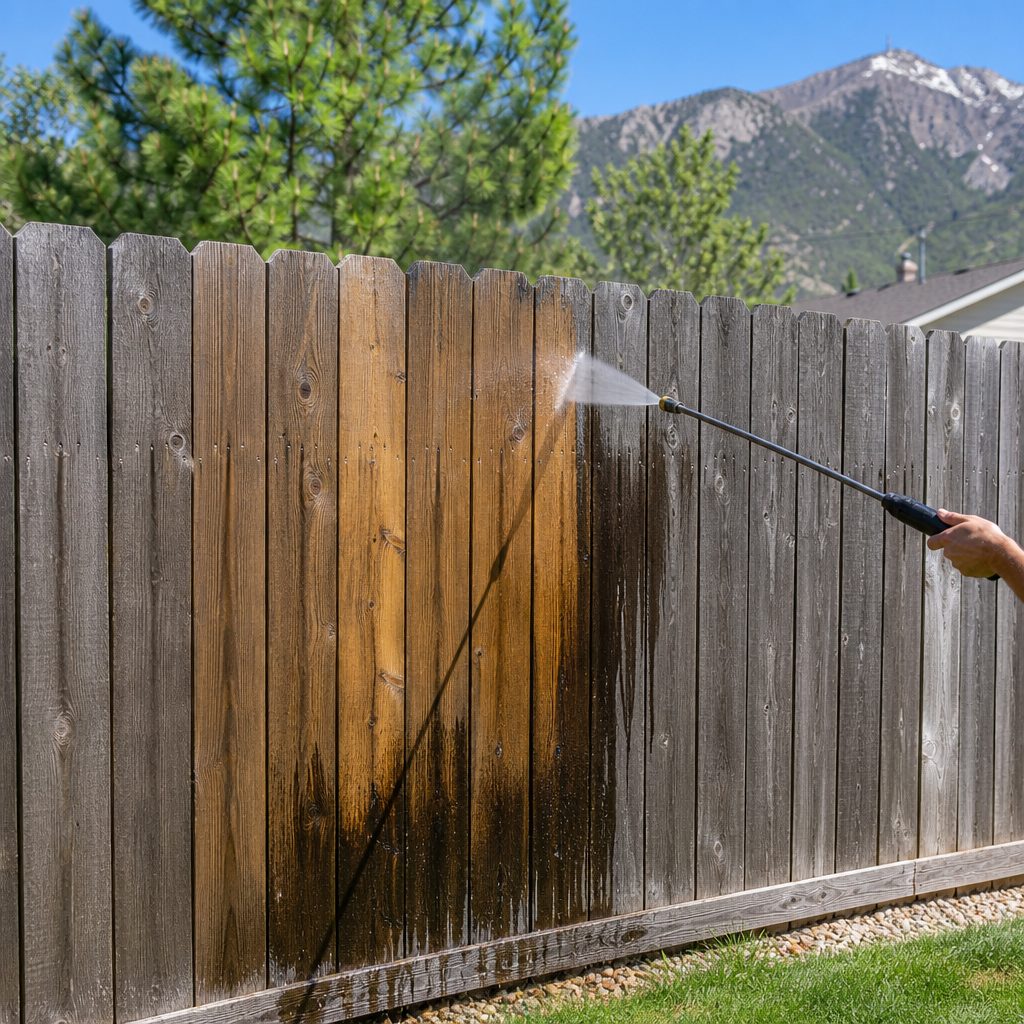
Step 1: Clean the Wood Thoroughly
Before anything touches the fence, it needs to be clean. Not "hosed off" clean — actually clean.
What pros use:
- A pressure washer at 1,200–1,500 PSI for most wood fences (too high and you raise grain and damage soft wood)
- A wood cleaner or brightener — especially important on older, gray wood. Weathered wood has oxidized and the cleaner opens the grain back up so stain can actually penetrate.
What to watch for in Fort Collins: Northern Colorado's UV exposure is 10–15% higher than many parts of the country. That UV grays out fence wood fast. If your fence looks silver-gray, you need a brightener, not just water.
Spray the cleaner on, let it dwell for 10–15 minutes, then pressure wash it off. Work top to bottom. Hit every board face, edge, and cap.
Step 2: Let It Dry — Completely
This step is where most DIY stain jobs die.
Stain is oil- or water-based. Wood that's still holding moisture will reject it — the stain sits on the surface instead of soaking in, and it peels.
How long does it take? Minimum 48 hours after washing in good conditions. In the spring and fall when humidity in the Fort Collins area runs higher, closer to 72 hours. Some dense or older wood needs longer.
Test it: press a small piece of plastic wrap against the board and tape the edges down. Wait 30 minutes. If moisture beads under it, wait another day.
Rushing this step is the single most common reason homeowners call us 18 months later wondering why the stain is already failing.
Step 3: Sand the Rough Spots
Power washing raises wood grain — that's normal and expected. Once the fence is dry, run your hand along the boards. If it's rough, it needs light sanding before staining.
A pole sander with 80-grit is your friend here. You're not stripping anything, just knocking down the raised fibers so the stain applies evenly and the finish looks smooth.
Pay extra attention to:
- Board ends and caps (these absorb the most moisture and grain-raise the hardest)
- Any previously stained areas where old finish is flaking or peeling — feather the edges so you're not staining over a lip
Dust the boards down after sanding. A dry paintbrush or a leaf blower works fine.
Step 4: Fix Loose Boards and Bad Nails
If a board is loose, staining over it won't fix the problem — it'll just look good for six months until it gets worse. Walk the fence before you pick up a brush.
What to address:
- Loose boards — re-screw or re-nail them flush
- Popped nails — drive them back in or pull and replace with screws
- Split boards — if they're split badly, replace them; stain won't hold over a crack that's moving
- Any rot — soft, spongy wood needs to come out before you invest in a stain job
In Colorado, fence posts and bottom rails take the most abuse from freeze-thaw cycles and ground contact. Check those first.
Step 5: Mask and Protect Everything Around the Fence
Pro tip that most homeowners skip: mask your concrete, pavers, landscape rock, and anything else bordering the fence before you start. Semi-transparent stain soaks into concrete and it doesn't come out.
Lay down plastic sheeting or drop cloth along the base. Use painter's tape on any surfaces the stain could drip onto. It takes 15 minutes and saves hours of cleanup.
Good Prep = Stain That Actually Lasts
If you're doing this yourself, following these steps puts you ahead of most DIY fence staining attempts. If you want it done right with a 7–10 year finish that holds up to Colorado's UV and freeze-thaw stress, we're happy to take a look.
We serve homeowners across Fort Collins, Windsor, Severance, and the surrounding areas with professional fence staining that's built to last. Our exterior staining process uses climate-tested products specifically selected for Northern Colorado conditions — not off-the-shelf stuff that wasn't designed for 300+ days of sun and 28+ freeze-thaw cycles a year.
Get a free on-site quote — we'll assess your fence and tell you exactly what it needs.