
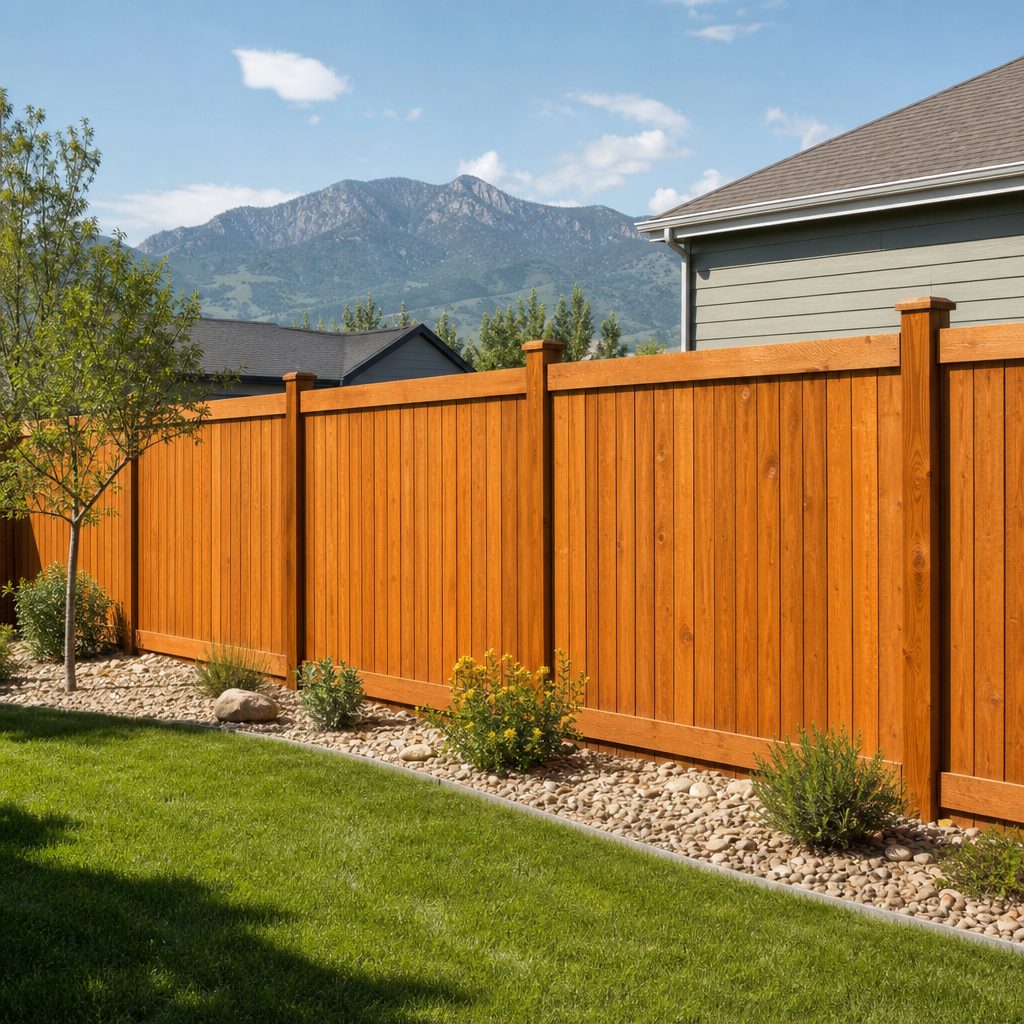
Why Cedar Fences Need Special Attention
Cedar is one of the most popular fencing materials in Fort Collins, Timnath, Windsor, and the surrounding Northern Colorado area — and for good reason. It's naturally rot-resistant, holds stain well when prepped correctly, and looks great. But cedar also comes with a catch most homeowners don't know about until they're staring at a blotchy, discolored fence six months after install.
That catch is tannin bleed.
Cedar wood contains natural oils and tannins that can migrate to the surface, especially when the wood is new or wet. If you stain too early — or use the wrong product — those tannins push through the finish and create brownish, rust-like bleed marks that no amount of additional stain will fix.
Getting cedar fence staining right in Northern Colorado means understanding the wood itself, the climate you're working in, and which products are actually built for both.
Wait Before You Stain: The New Cedar Rule
If you just had a cedar fence installed, resist the urge to stain it immediately. New cedar needs time to weather and dry out before it will accept a stain properly.
The general rule: wait 30–60 days after install before staining. In Northern Colorado's dry climate, cedar often dries faster than it would in a humid region, but you still want to see the wood transition from that bright, fresh-cut color to a slightly grayer, more muted tone. That signals the surface oils have released and the wood is ready to accept a penetrating stain.
Staining too early traps moisture and oils beneath the finish, which leads to peeling, lifting, and uneven color — problems that are expensive to correct.
Oil-Based vs. Water-Based Stain on Cedar
This is the most common debate in cedar fence staining, and the honest answer is: both can work, but they're not equal on cedar.
Oil-Based Stains
Oil-based penetrating stains are generally considered the gold standard for cedar. They absorb deep into the wood grain, move with the wood as it expands and contracts through Northern Colorado's 28+ freeze-thaw cycles, and tend to last longer before requiring reapplication. They also do a better job of locking out the tannins that cause bleed.
The tradeoff: longer dry times, stronger fumes, and slightly more difficult cleanup.
Water-Based Stains
Modern water-based formulas have improved significantly. They dry faster, have lower VOCs, and are easier to work with. Some high-quality water-based products perform well on cedar — but they tend to sit more on the surface than penetrate, which means they're more vulnerable to peeling as the wood moves seasonally.
Our recommendation for cedar in Fort Collins and Northern Colorado: oil-based penetrating stain for new fences and full reapplications; a quality water-based semi-transparent formula if you're doing a light maintenance coat on an already-stained fence in good condition.
Product Recommendations That Actually Hold Up
Here are stain lines worth considering for cedar fence staining in NoCo:
- Armstrong Clark – Widely regarded as one of the best oil-based penetrating stains for cedar. Excellent tannin-blocking properties, holds up well to UV and freeze-thaw stress.
- Defy Extreme Wood Stain – A water-based formula with zinc nano-particle UV blockers. Strong performance for a water-based product, good option for lighter refreshes.
- TWP (Total Wood Preservative) 100 Series – Oil-based, deep penetrating, and highly rated for cedar specifically. A professional-grade option that lasts.
- Cabot Australian Timber Oil – Works well on dense cedar, particularly for fence boards with tighter grain.
Avoid big-box store bargain stains on cedar. They tend to film-build on the surface rather than penetrate, which means peeling within a season in Colorado's UV-heavy environment.
How Long Does Cedar Fence Stain Last in Northern Colorado?
A properly stained cedar fence in Fort Collins or Timnath should last 3–5 years before needing a full reapplication, assuming:
- The wood was properly dried and prepped before staining
- A quality penetrating stain was used
- The fence faces typical Northern Colorado sun exposure
South and west-facing fence sections will fade faster due to higher UV load. Annual visual inspections help — if the stain is fading significantly or the wood looks gray and dry, it's time to reapply before the wood itself starts to suffer.
The Process: What Professional Cedar Fence Staining Looks
Like
- Clean the fence — Pressure washing or wood cleaner to remove dirt, mildew, and any previous failing finish
- Let it dry — 48–72 hours minimum after washing before staining
- Apply stain — Two coats by brush or airless sprayer, working wet-edge to wet-edge to avoid lap marks
- Wipe excess — Especially critical with oil-based stains; any pooled product left on the surface will get tacky and sticky
Done right, the whole process takes a day or two depending on fence size. Done wrong, it's a project you'll be redoing in 12 months.
Get It Right the First Time
If you're a homeowner in Fort Collins, Timnath, Windsor, or anywhere in Northern Colorado with a cedar fence that needs staining — or one that's already showing signs of tannin bleed or peeling — we can help. Our team handles fence staining with the same climate-specific approach we bring to every exterior project.
Reach out for a free on-site quote and we'll take a look at what you're working with.